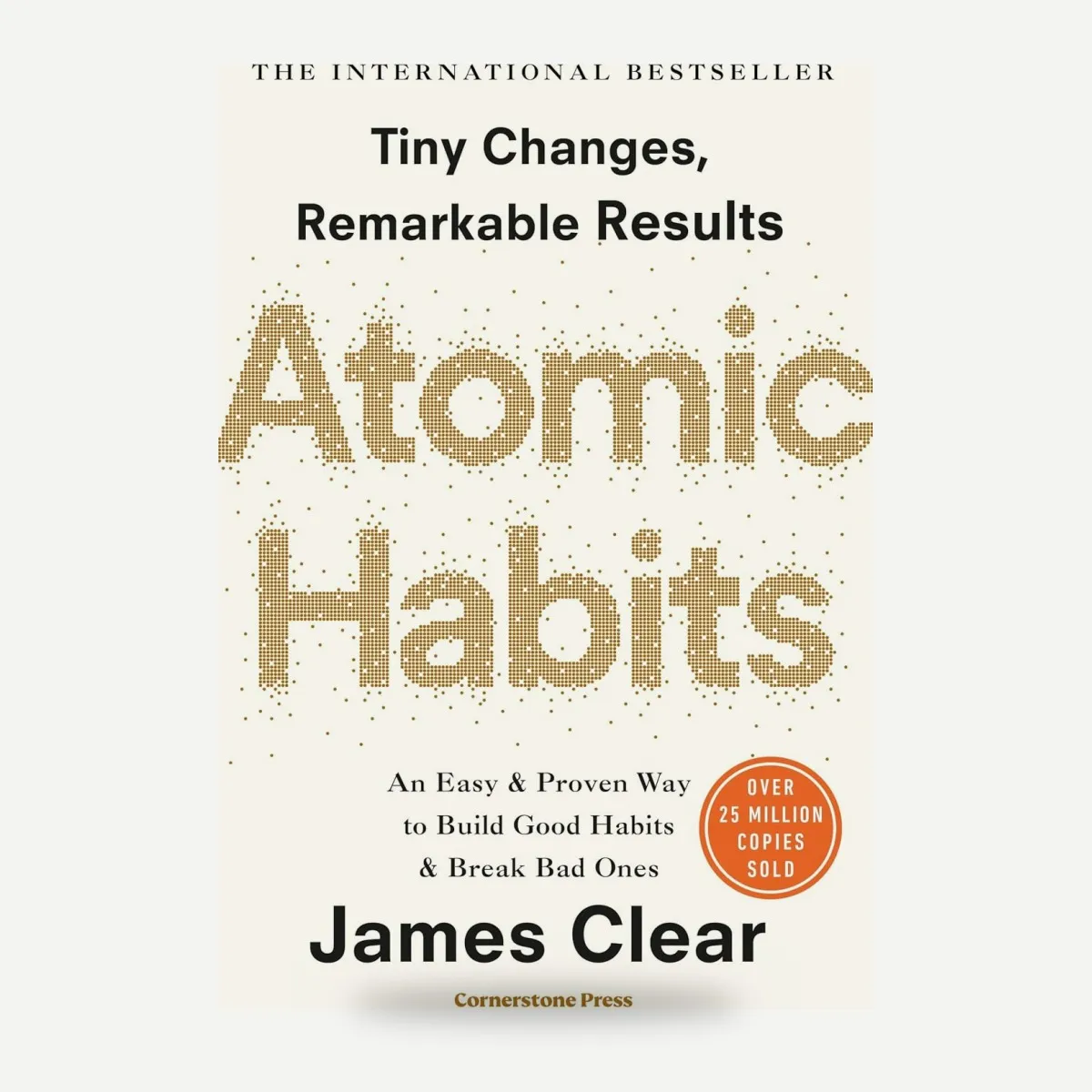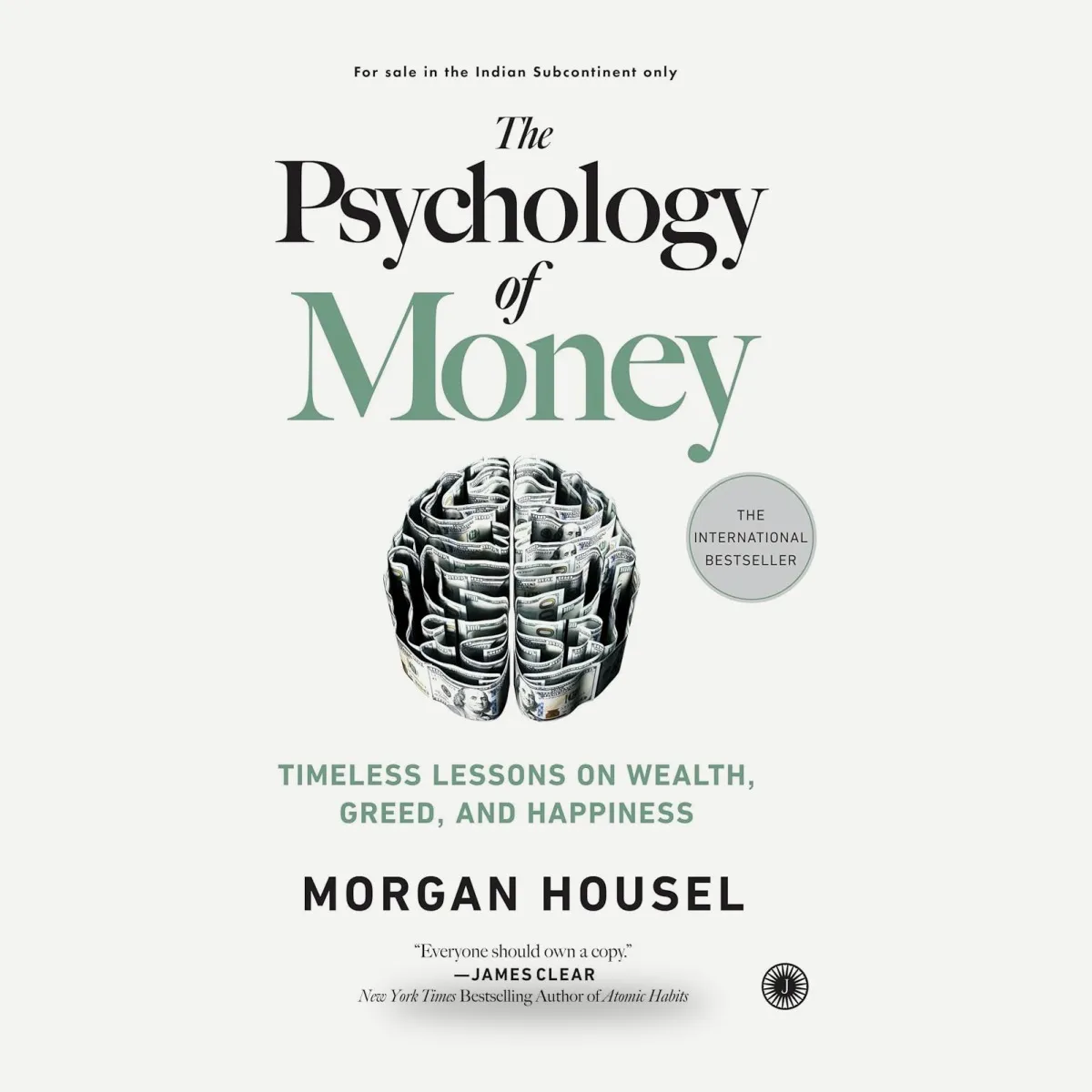
Our Short tells the story of Finn: first job, first salary, and within a month a new phone on EMI because all his friends had one. Then friends showed him F&O profit screenshots, and he jumped in. SEBI’s study of FY26 found that about 88 in 100 individual F&O traders lost money, and Finn was one of them. It isn’t only Finn: personal loans in India grew 16.9% in a year (RBI, August 2026), and Americans owe $1.285 trillion on credit cards (New York Fed, Q3 2026). That’s where this book comes in.
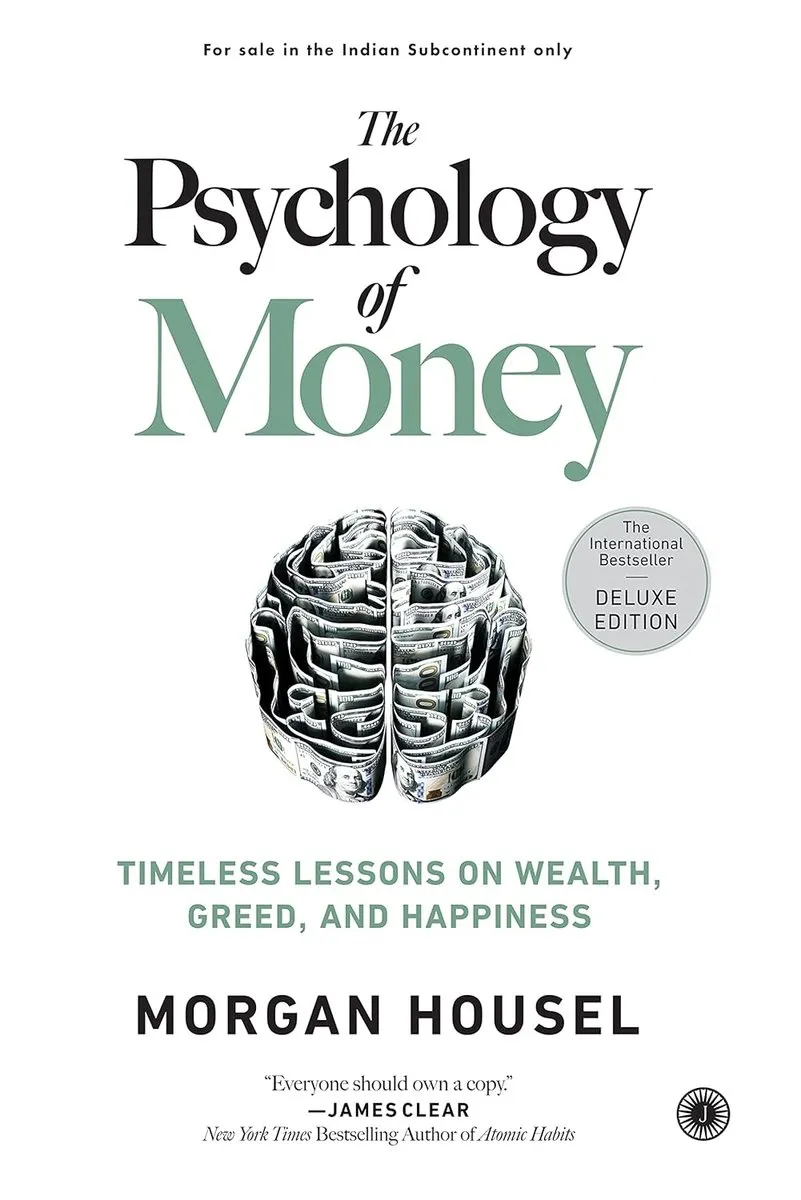
What it is
A book of short stories about how people really behave with money, by Morgan Housel, published in India by Jaico. Key details:
- 19 short stories in 20 short chapters, each readable in one sitting
- The big idea: doing well with money is less about intelligence and more about behaviour
- Over 10 million copies sold worldwide, per the publisher
- Editions: paperback, deluxe hardcover, and a Hindi edition (Dhan-Sampatti Ka Manovigyan)
Why it made the list
- It opens with a story you won’t forget. Ronald Read was a petrol-pump worker and janitor who quietly saved and invested for decades, and left about $8 million when he died. A Harvard-educated Wall Street executive, meanwhile, went bankrupt over a mansion bought on debt. Same world, opposite behaviour.
- It explains why we show off. In the “Man in the Car Paradox” chapter, Housel says that when you see someone in a Ferrari, you admire the car, not the driver. The respect we buy on EMI rarely comes.
- It makes time the hero. $81.5 billion of Warren Buffett’s $84.5 billion came after his 65th birthday. The real edge was starting early and staying in for a long time, not a hot tip.
- It redefines being rich. Housel’s line, “Controlling your time is the highest dividend money pays,” is the clearest reason to save before you spend.
A closer look
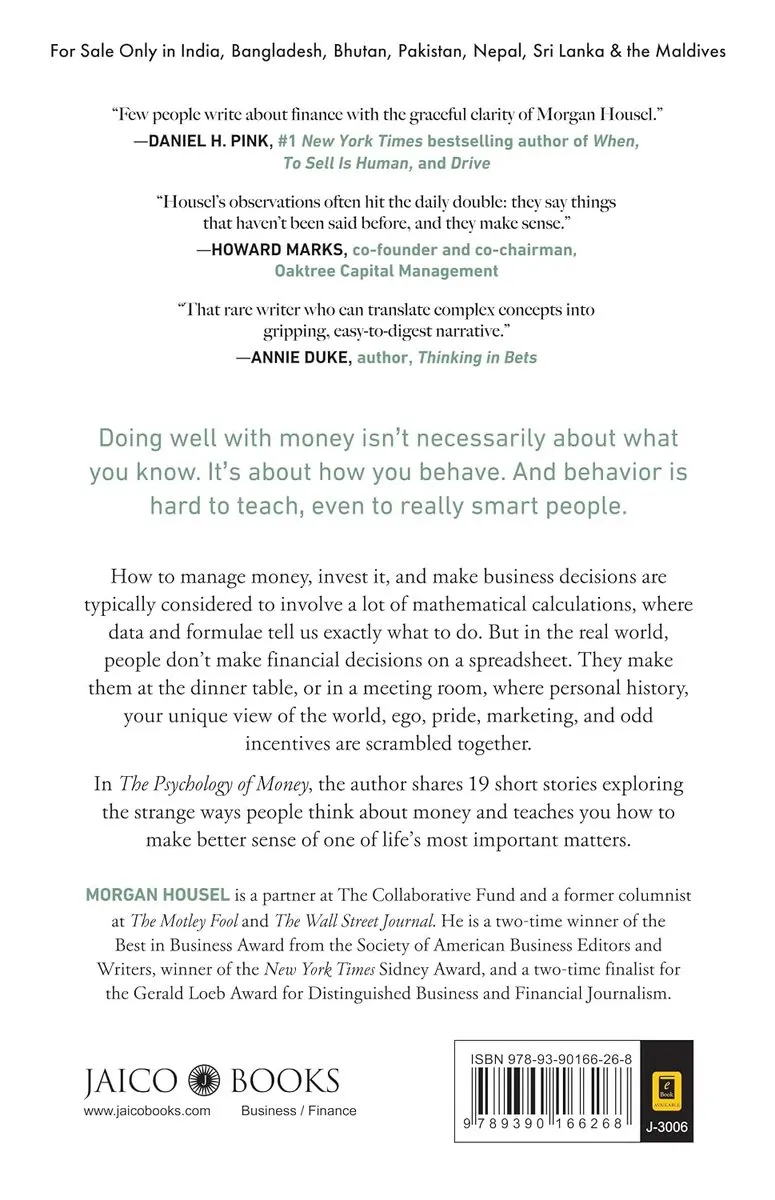
The back cover: “Doing well with money isn’t necessarily about what you know. It’s about how you behave.”
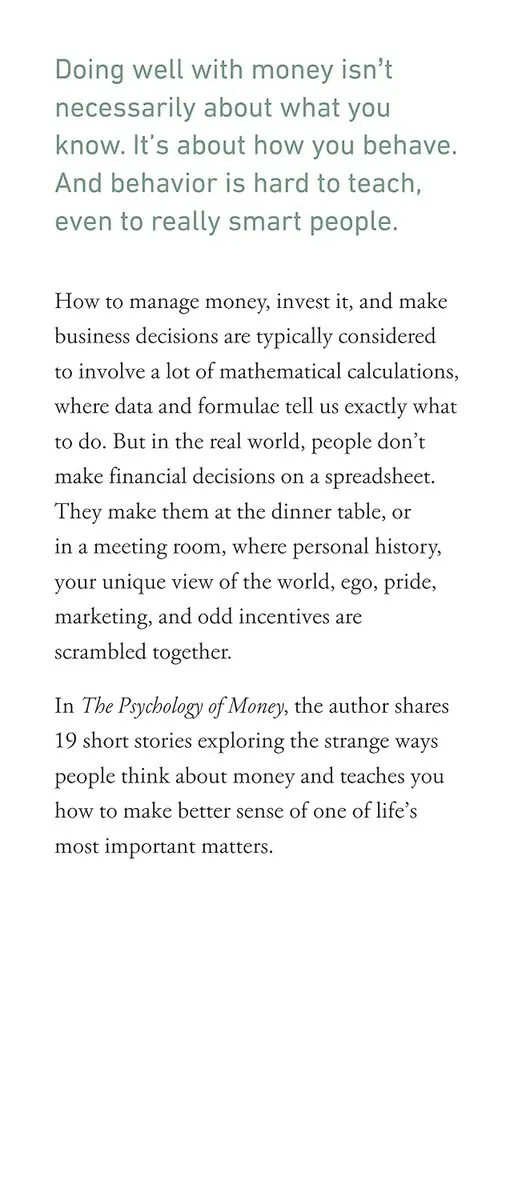
The deluxe hardcover’s front flap.

The back flap, with Morgan Housel’s photo and bio.
The honest part
This book won’t tell you what to buy, how to budget or which stock to pick. It changes how you think about money, and that only helps if you act on it. Most of its examples are American, and a few ideas repeat across chapters. If you want a step-by-step plan, pair it with a practical personal-finance guide. As a first book on money for someone with a new salary, it’s hard to beat.