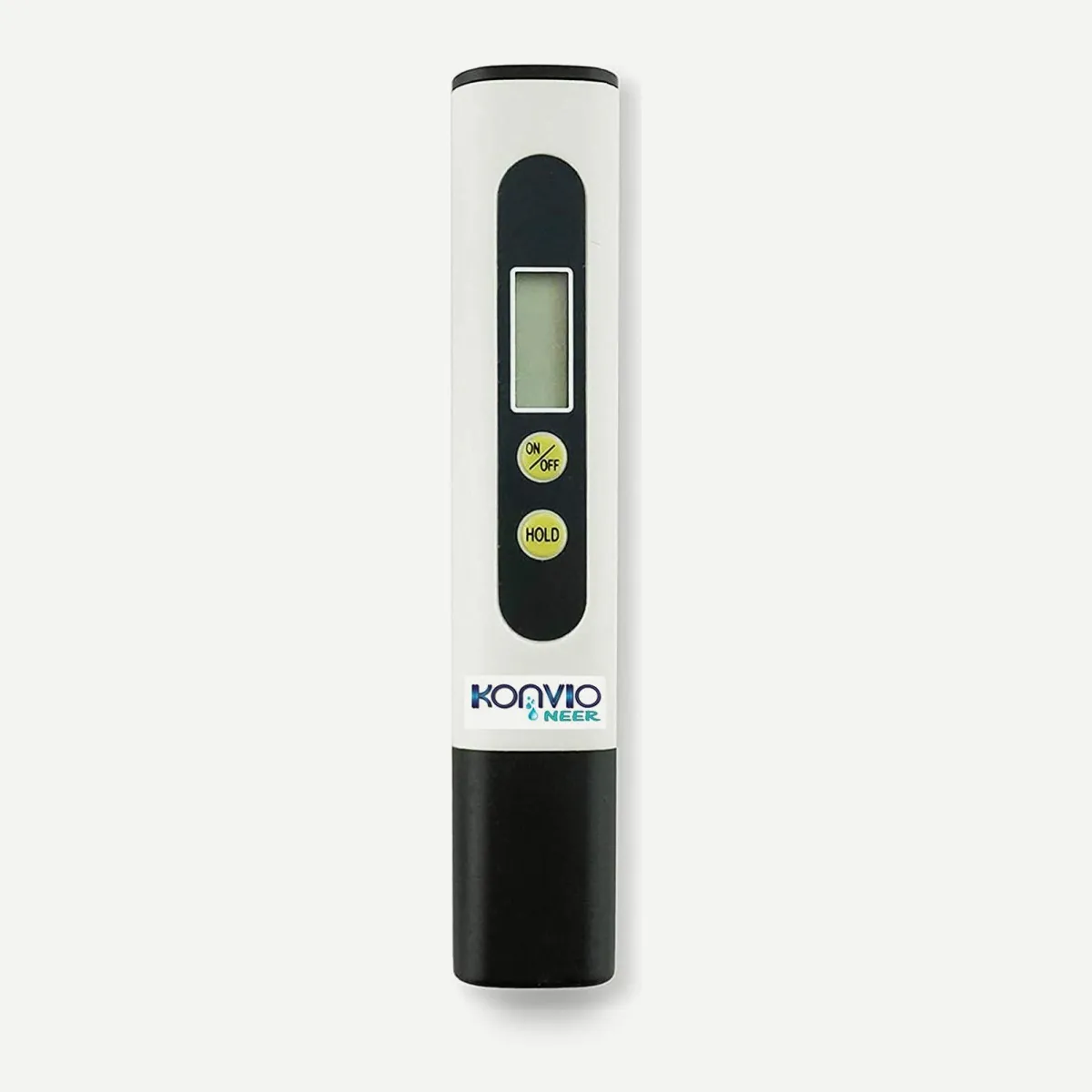
Konvio Neer TDS Meter: Check Your RO and Tap Water

Water check · Water · No. 30

Konvio Neer TDS Meter: Check Your RO and Tap Water

A cheap, handy way to see whether your RO is working and how hard your water is, as long as you remember a good TDS reading doesn't mean the water is free of germs.

Measures
Total dissolved solids (salts and minerals), in ppm
Range
0–9999 ppm
Display
Digital, with a hold button and auto shut-off
Uses
Drinking water, RO and filters, aquariums, hydroponics
Same brand
pH test strips (1–14) and pH + ORP test drops

Good

  • Shows in seconds whether your RO purifier is actually lowering TDS
  • Pocket-sized, battery powered, simple to read
  • pH strips and drops from the same brand cover acidity too

The catch

  • Can't detect bacteria, sewage or germs: a normal reading doesn't mean safe
  • A low TDS isn't always better; it only tells you about dissolved salts

Our Short starts with Aayush Sapra’s story: black, sewer-like water at his home in Delhi, an infection in the family, and complaints nobody answered. Then he tests a water ATM’s water with a TDS meter and the reading looks fine. That’s where most people get it wrong: a good TDS reading doesn’t mean the water is safe. Here’s what a TDS meter is actually good for.
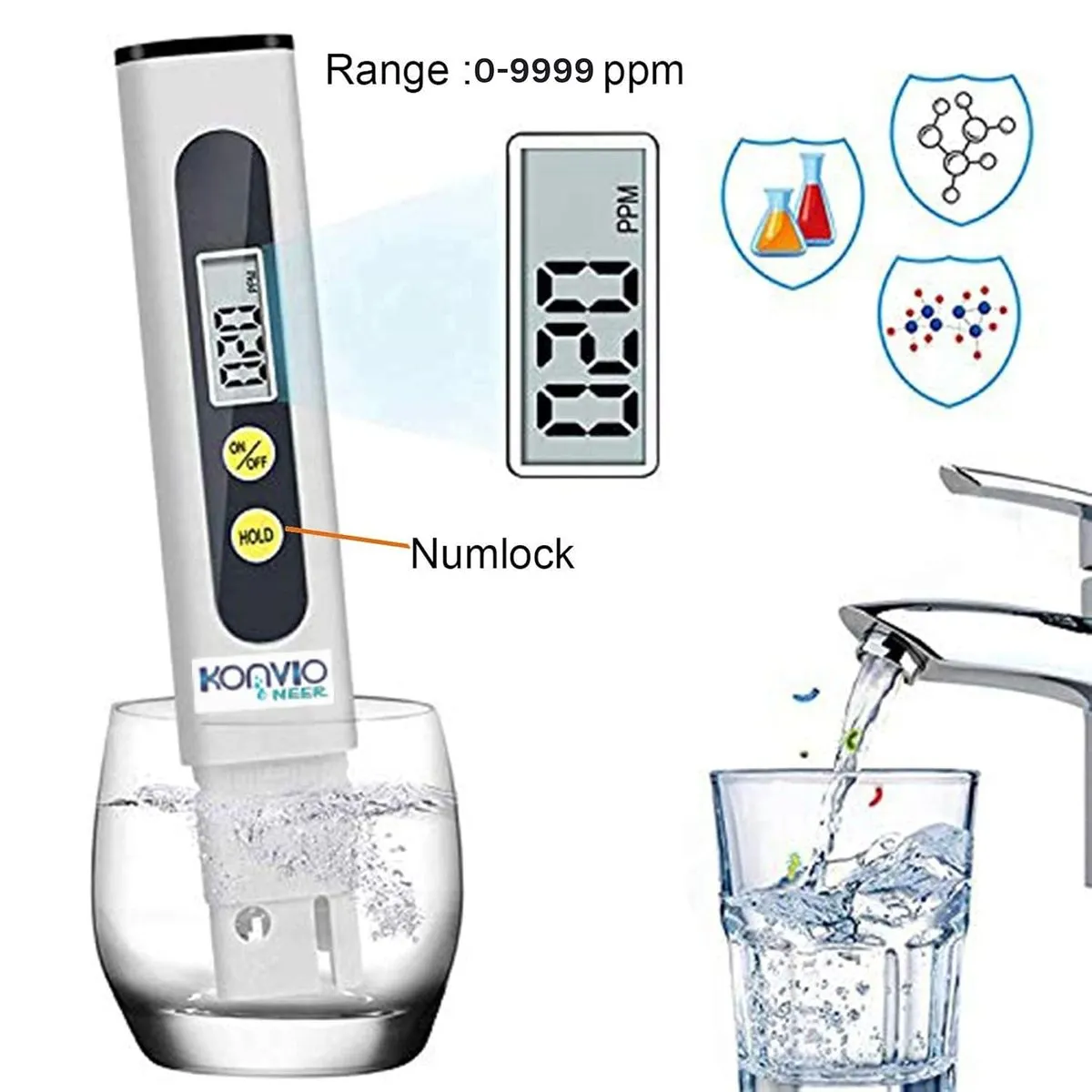
The Konvio Neer TDS meter dipped in a glass of water

What it is

A pocket digital TDS (total dissolved solids) meter from Konvio Neer. Key details from the listing:

  • Measures dissolved salts and minerals in ppm, from 0 to 9999
  • Digital display with a hold button and auto shut-off
  • For drinking water, RO and filters, aquariums and hydroponics
  • Same brand: pH test strips (1–14) and pH + ORP test drops if you also want to check acidity

Why it made the list

  1. It checks your RO in seconds. Test the tap water, then the RO water: if the number hardly drops, your filter or membrane needs a service.
  2. It shows hard or salty water, the kind that leaves white marks and makes water taste off.
  3. It’s cheap and simple, with nothing to set up.

A closer look
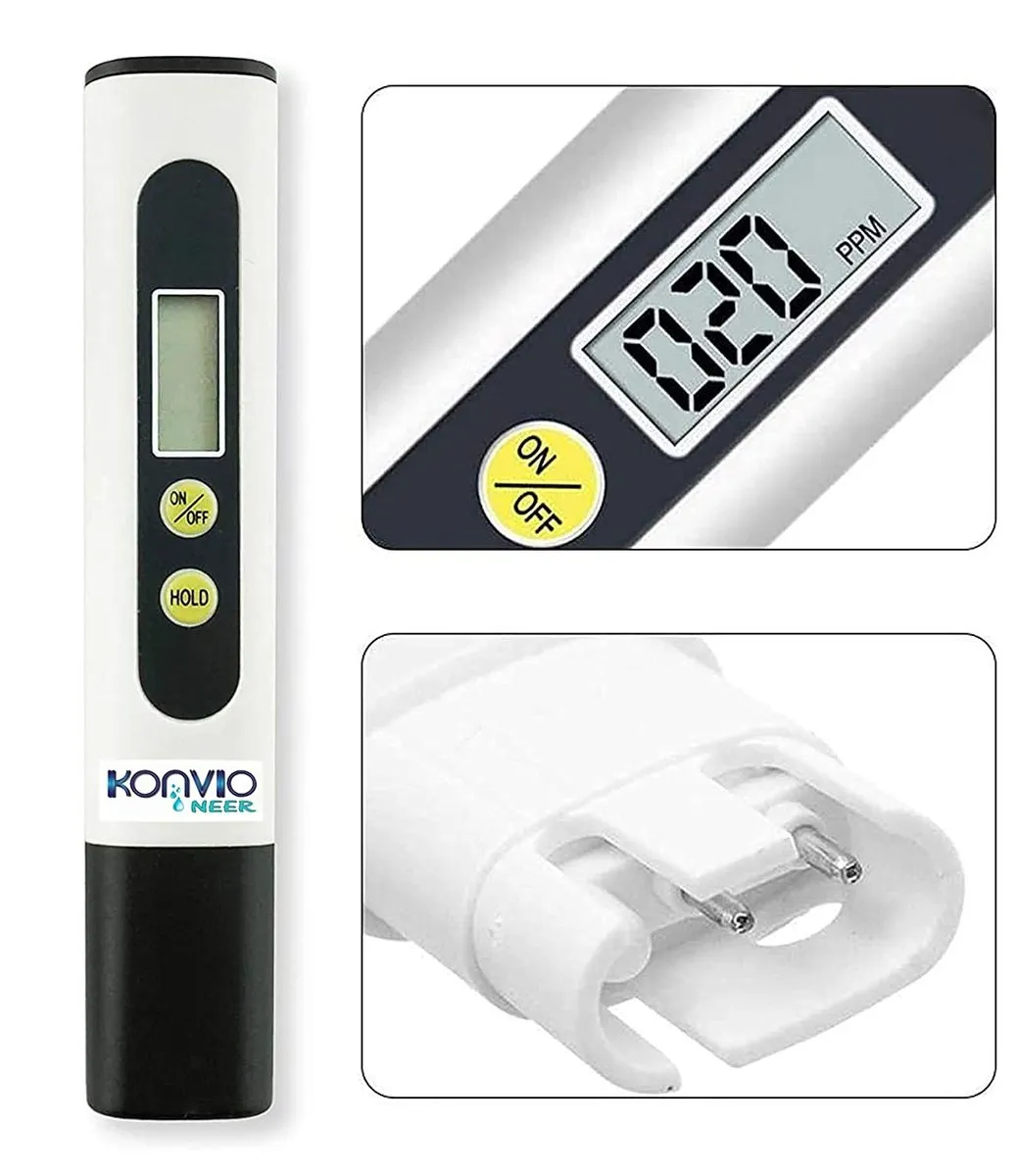
The Konvio Neer TDS meter’s display and probe

The digital display and the probe at the tip.
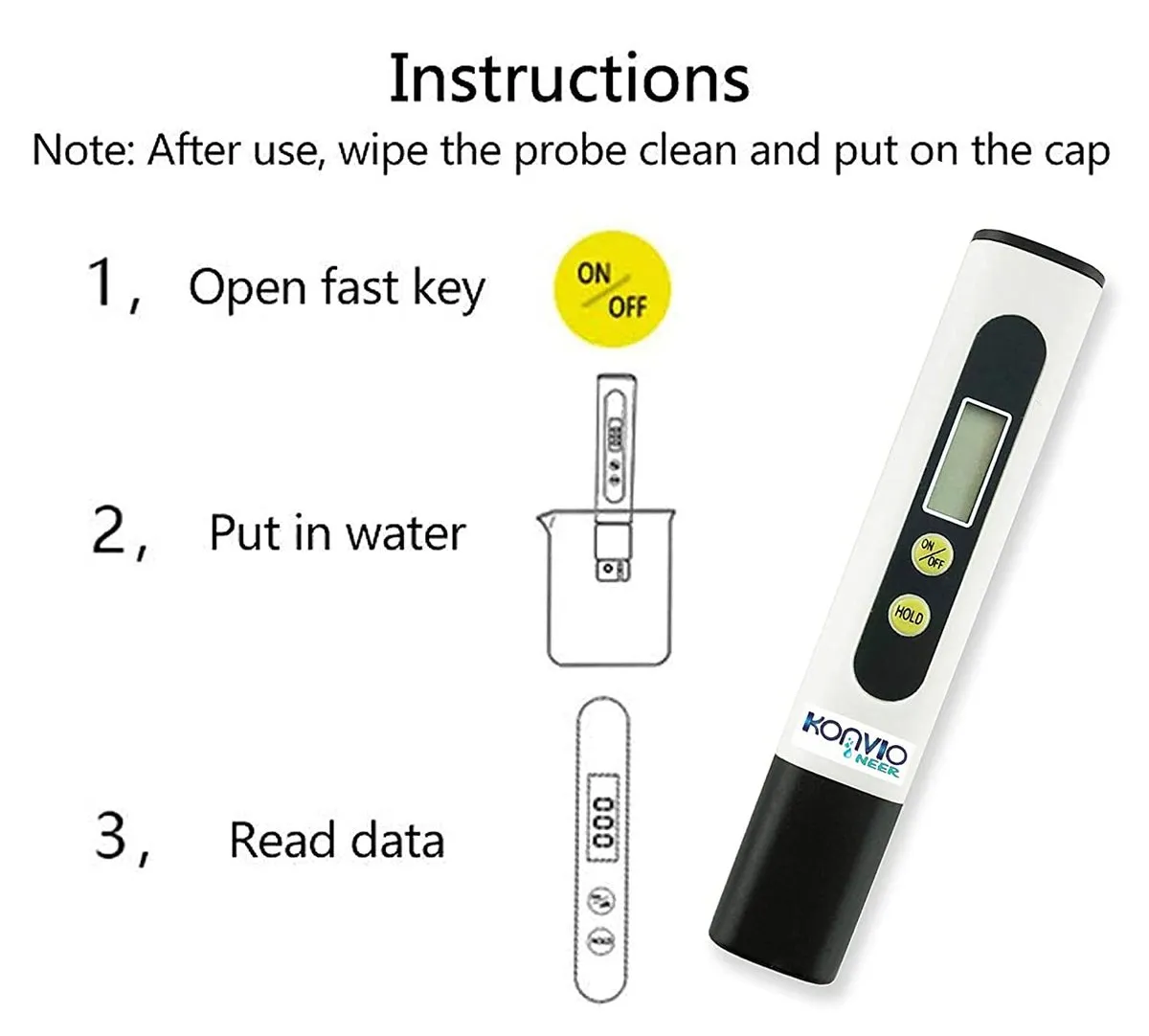
How to use the TDS meter in three steps

Switch it on, dip it in water, read the number.
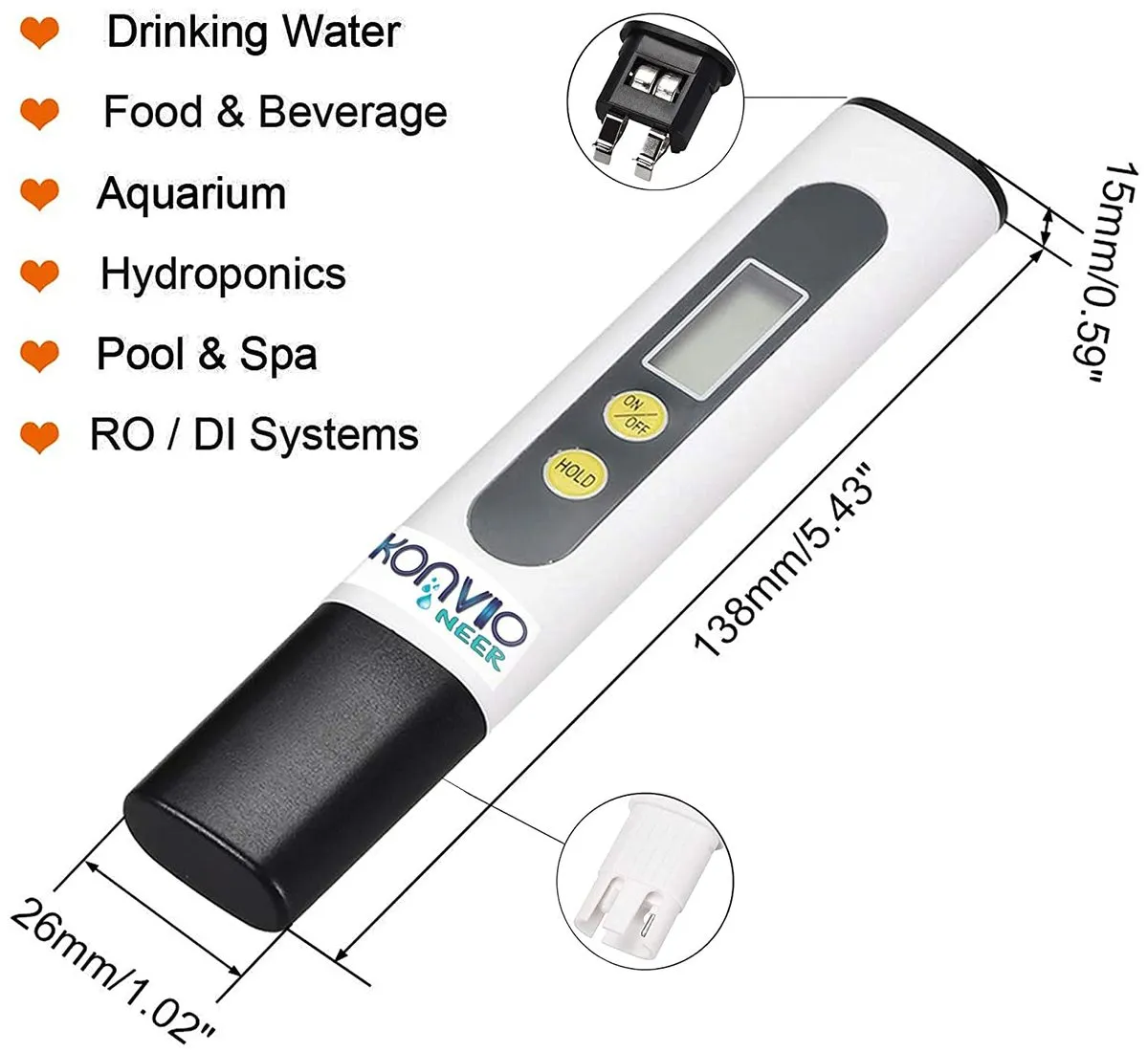
Where the TDS meter can be used

Drinking water, RO systems, aquariums and hydroponics.
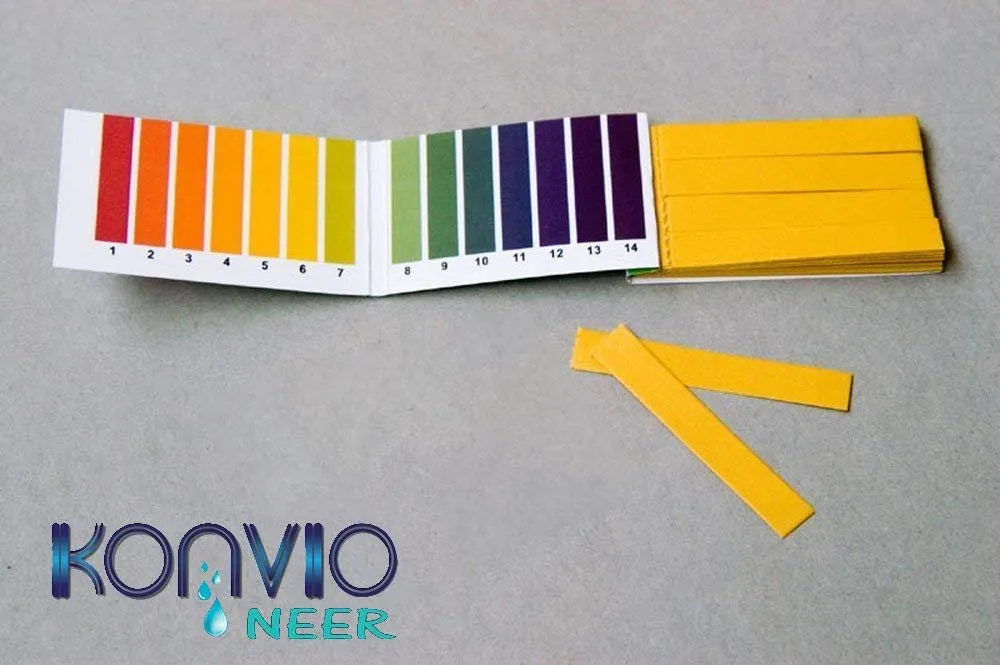
Konvio Neer pH test strips with the colour chart

The pH strips: dip one and match the colour to the chart.
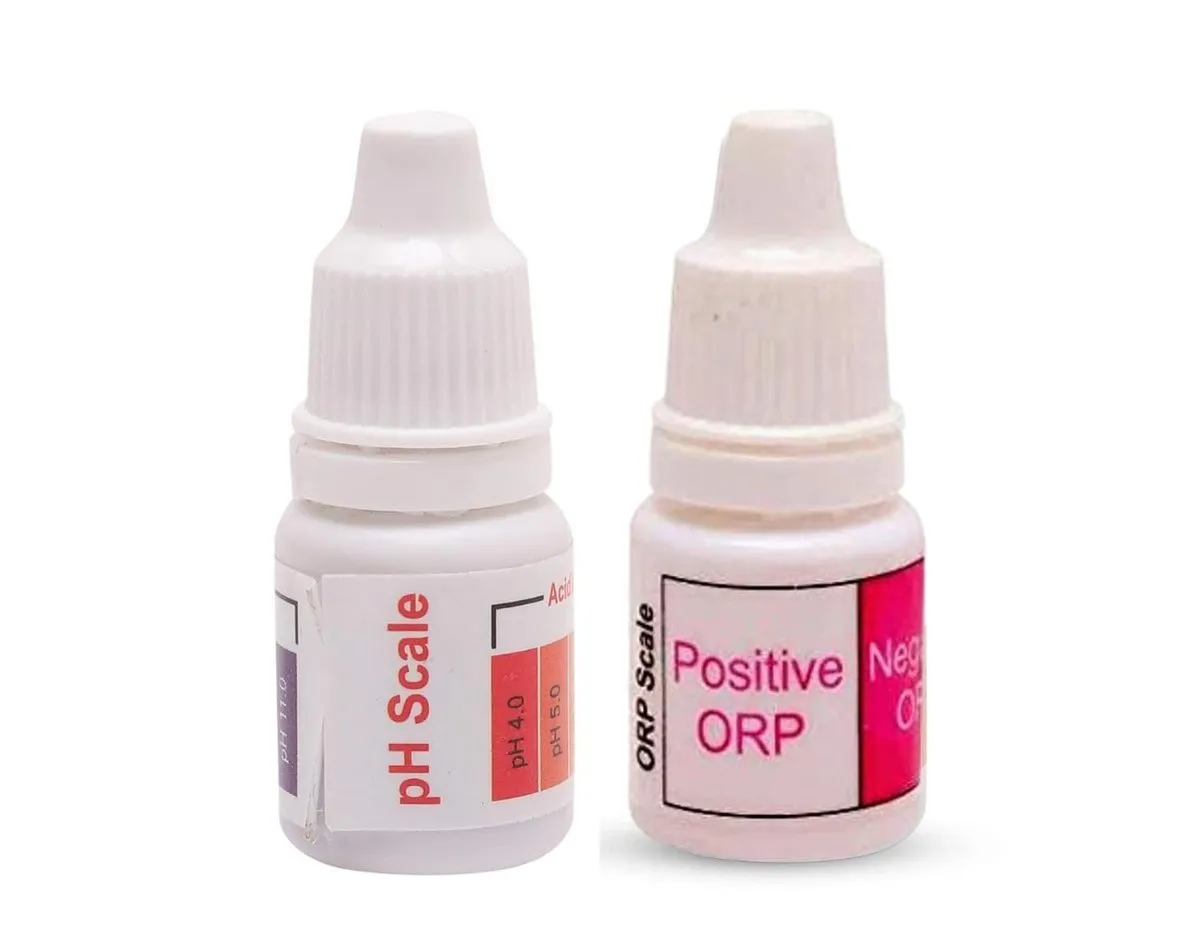
Konvio Neer pH and ORP test drops

The pH and ORP test drops.

The honest part

A TDS meter can’t detect bacteria or sewage. Contaminated water can show a perfectly normal reading, so never use it to decide that dirty-looking or smelly water is safe. If the colour or smell changes, boil the water or use a UV purifier, and complain to your water board. Use the meter for what it’s good at: checking your RO and how hard your water is.

Questions

Can a TDS meter tell me if my water has sewage in it?

No. It only measures dissolved salts and minerals. Sewage contamination is about bacteria, which a TDS meter can't detect. If the water looks or smells wrong, boil it or use a UV purifier and report it.

What TDS reading is good for drinking water?

BIS IS 10500 sets 500 mg/L (ppm) as acceptable, and allows up to 2000 only where no other source exists. Very low readings are fine for safety but can taste flat.

How do I use the Konvio Neer TDS meter?

Take off the cap, switch it on, dip the tip into a glass of water up to the marked line, wait for the number to settle and read it. Rinse and dry the tip afterwards.